Bondi Partners publishes original intelligence for C-suite and Board leadership across the world’s most strategically important economies — every week in Bondi Perspectives, and every month in the Bondi Partners U.S. Pulse.
Insights
Intelligence from where policy, politics and the private sector meet.
-
BONDI PERSPECTIVES
The weekly intelligence brief for leaders operating across allied economies.
-
BONDI PARTNERS U.S. PULSE
How Americans view the U.S.–Australia relationship and the issues that bind the two economies.
Bondi Perspectives
The weekly intelligence brief for leaders operating across allied economies.
Bondi Perspectives is the firm’s weekly read on the geopolitical, regulatory and political developments shaping commerce and statecraft across the United States, Australia, the United Kingdom and Japan.
Edited inside the firm and curated for C-suite, Board and senior executive readers, each edition pulls the signal from the week’s noise — the moves that matter for ambitious companies operating in national security and cyber space, medical tech and consumables, critical minerals and the clean energy transition.
Request access to Bondi Perspectives
We review each request individually and confirm by email. We’ll only use these details for that purpose — never sold, never shared.
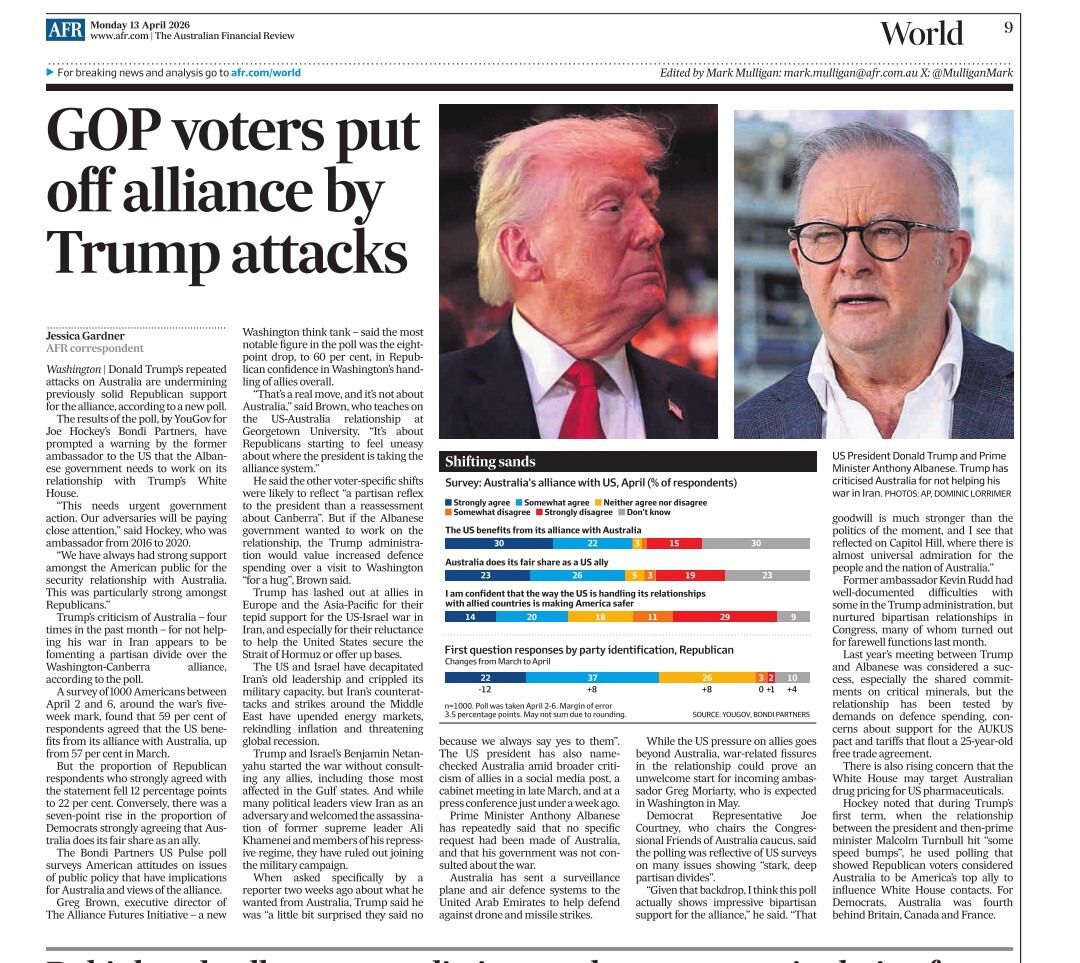
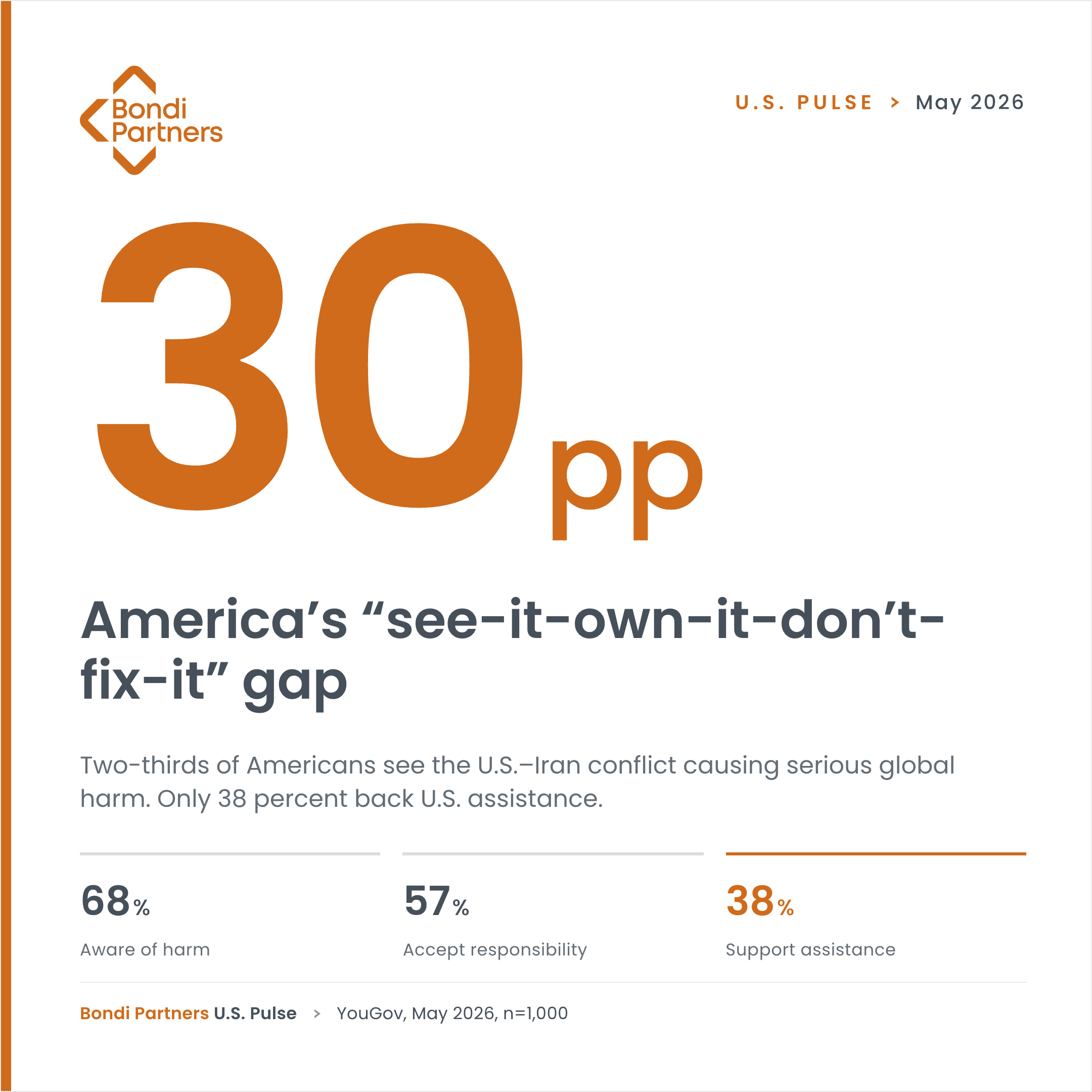
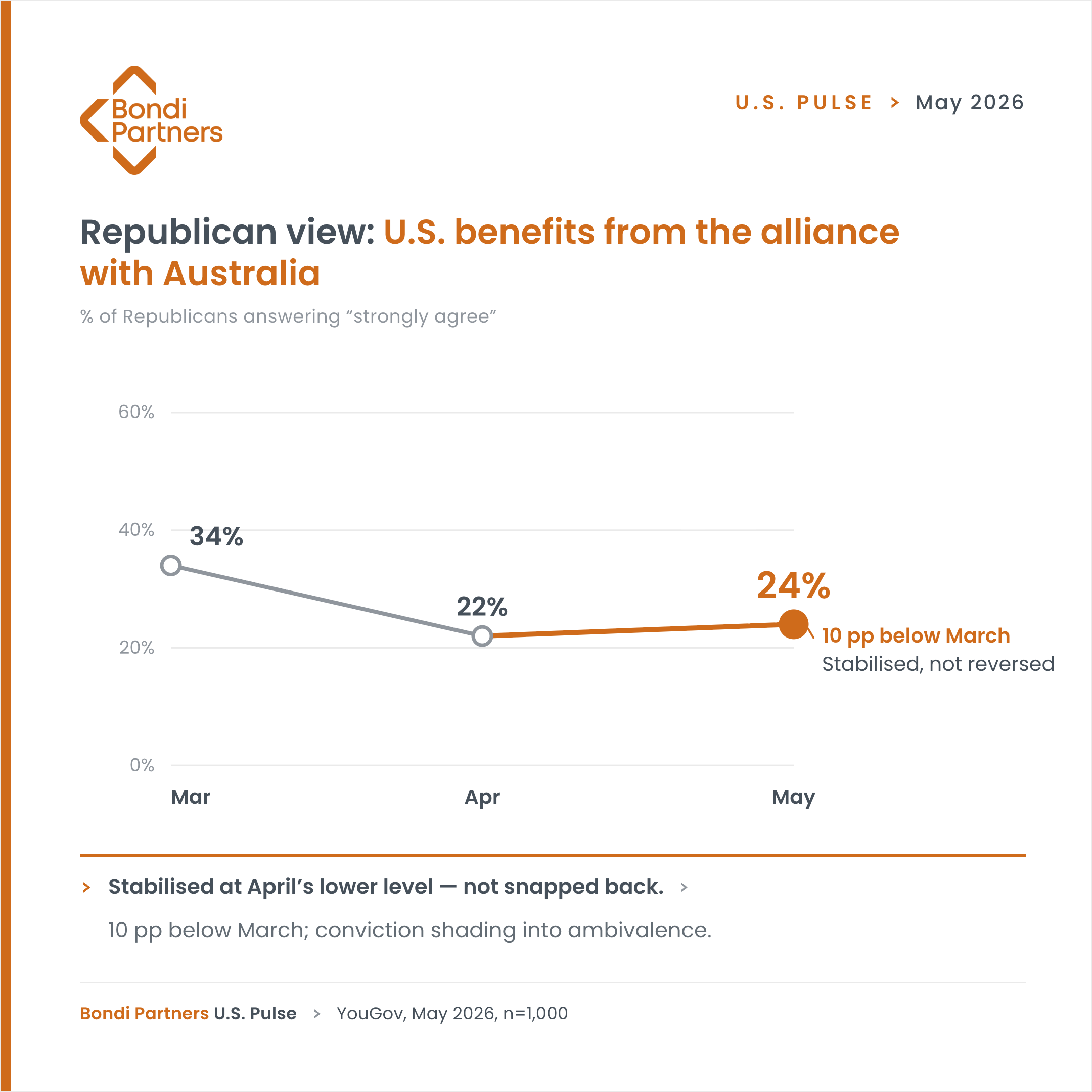
Bondi Partners U.S. Pulse
How Americans view the U.S.–Australia relationship and the issues that bind the two economies.
The Bondi Partners U.S. Pulse is a monthly polling collaboration with YouGov, tracking how Americans view the U.S.–Australia relationship and the issues that bind the two economies — trade, defense, AUKUS, critical minerals, energy, and the wider allied agenda.
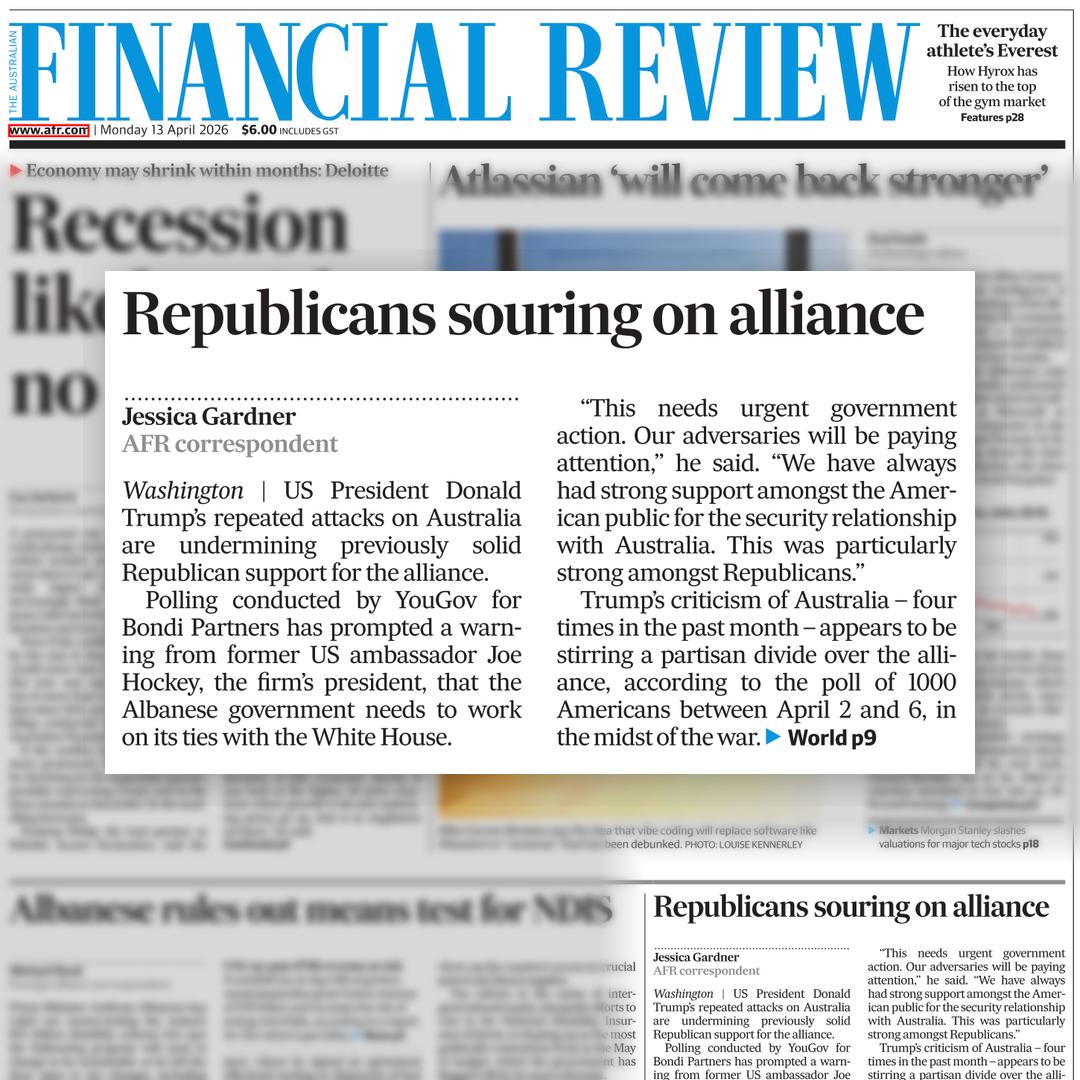
Each wave runs a nationally representative sample of U.S. registered voters. Findings are published first in The Australian Financial Review, then released here in full — including a standing Alliance Tracker that monitors the U.S. public’s headline read on the Australia-U.S. relationship, wave on wave.
The Pulse exists because the decisions that shape commerce between allied economies are made by politicians who answer to voters. Knowing what those voters think — not anecdotally, but with the rigor of a nationally representative sample — gives boardrooms a better view of where the alliance is heading next.